













Face & Neck Keloids


‘Expert Treatment for Face & Neck Keloids’
Leading European specialists delivering safe, effective solutions with advanced lasers, medical therapy and refined surgical techniques—especially for skin of colour.
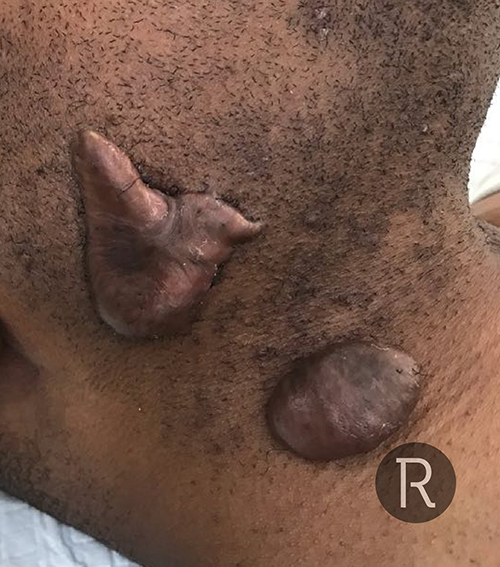
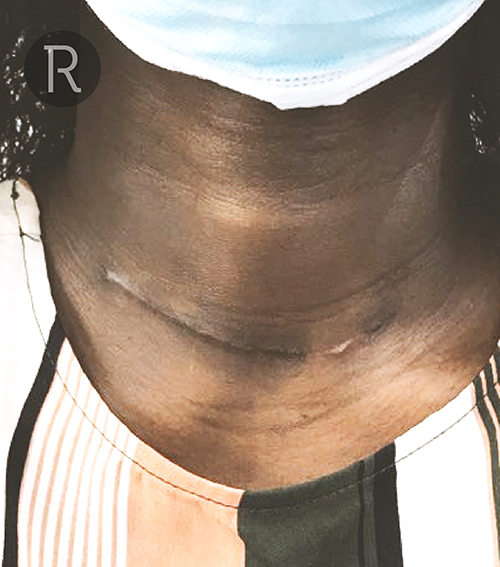
Keloid scars on the face and/or neck can be particularly distressing as they can be disfiguring, painful and can even get infected. Keloids on the face and neck are often the result of conditions such as recurrent cystic acne or ingrown hairs. They are less often the result of traumatic injuries or surgery. Depending upon the cause of the Keloid, treatment options vary.
At Rejuvence Clinic we offer a thorough and comprehensive range of treatment options for Keloid scars in people of all ethnicities. Many of our clients come to us with troublesome Keloid scars on the face and neck.
Injectables start from £100
Laser Treatment starts from £200
What are keloids?
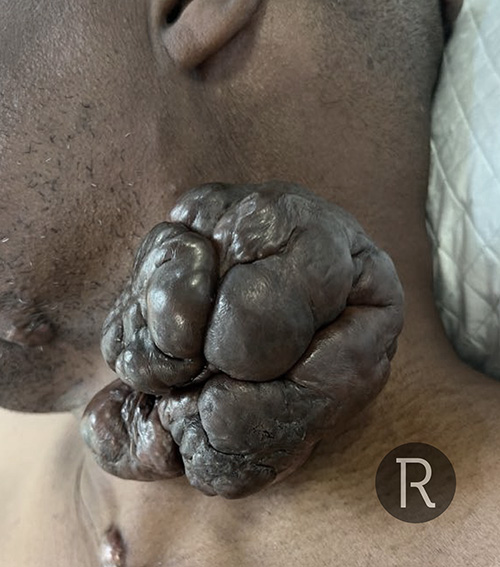
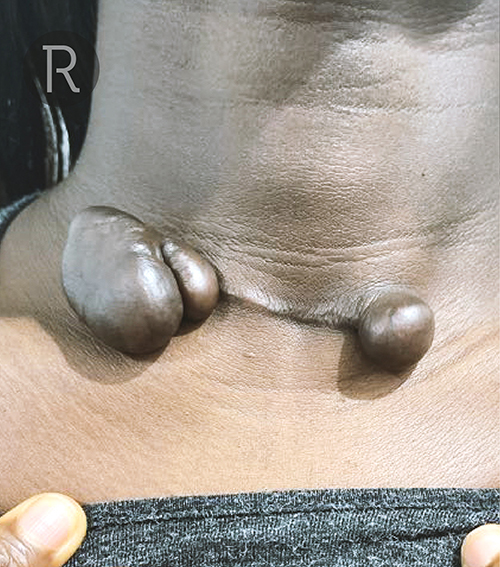
Keloids or keloid scars develop as a result of an overgrowth of collagen within cuts or wounds. They can also occur after treatments such as aggressive lasers or deep chemical peels. Keloids are defined as raised scars that extend beyond the borders of the original cut or wound. They can grow to significant size and can often also be associated with itching and peeling. They can be very challenging to treat and are often associated with a significant rate of recurrence.
What causes keloids on the face and neck?
Keloid scars on the face and neck can be the result of medical conditions, injuries or surgery. There are also differences between men and women.
Who is prone to keloids on the face and neck?
Keloid scars are generally more common in those of Asian, Southeast Asian and Afro-Caribbean decent. There are a large number of causes of keloids on the face and neck. These can be the result of specific medical conditions or following surgery.
Our Doctors – Face & Neck Keloid Prevention and Recurrence Specialists
Effective prevention of recurrence in face and neck keloids requires a coordinated approach that addresses active skin disease, long-term skin care, and surgical expertise where necessary. At Rejuvence Clinic, face and neck keloid management is led by an experienced medical and surgical team, allowing patients to benefit from both advanced non-surgical prevention strategies and specialist surgical intervention for complex cases.
Dr Sam Ghani
Surgical & Non-Surgical Lead - Complex Face and Neck Keloid Resection
Dr Sam Ghani is the surgical lead for face and neck keloid removal at Rejuvence Clinic and has extensive experience managing large, recurrent, and highly complex keloid scars. He is particularly sought out for cases involving extensive keloid resections, revision surgery following failed procedures elsewhere, and keloids resulting from acne, surgery, or previous aggressive laser treatments.
Dr Ghani’s surgical expertise lies in carefully planned excision techniques that prioritise recurrence prevention, functional preservation, and cosmetic outcome, even in anatomically challenging regions of the face and neck. Surgery is always undertaken within a wider prevention-led strategy, with close follow-up and surveillance.
Dr Naeem Mitha
Medical Lead for Non-Surgical Keloid Treatments
Dr Naeem Mitha leads the non-surgical prevention and recurrence control of face and neck keloids at Rejuvence Clinic. He has a strong clinical interest in acne, inflammatory skin conditions, and long-term skin health, which are central to preventing keloids from recurring in these highly visible areas.
Dr Mitha plays a key role in identifying and treating the underlying causes of keloid formation—particularly severe acne, folliculitis, ingrown hairs, and impaired skin barrier function—alongside active keloid treatment. His work focuses on ongoing skin care, inflammation control, and maintenance strategies designed to reduce recurrence risk over time.
Before & Afters
©Individual results may vary.
Before
After

Before
After
Before
After
Before
After
Before
After
Before
After
Before
After
Before
After
Before
After
Before
After
Before
After
Before
After
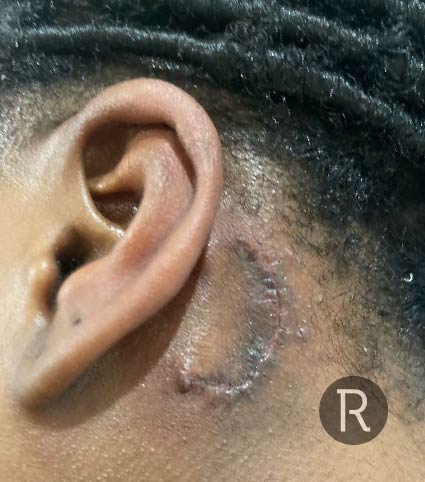
Before
After
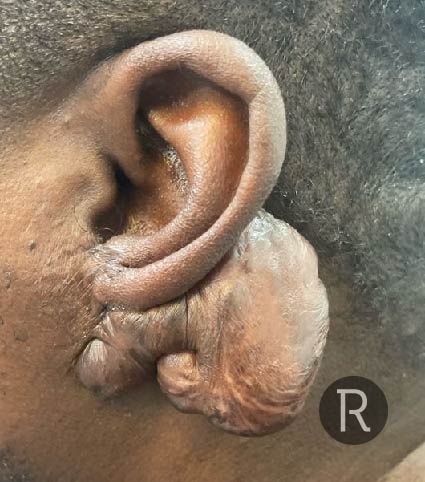
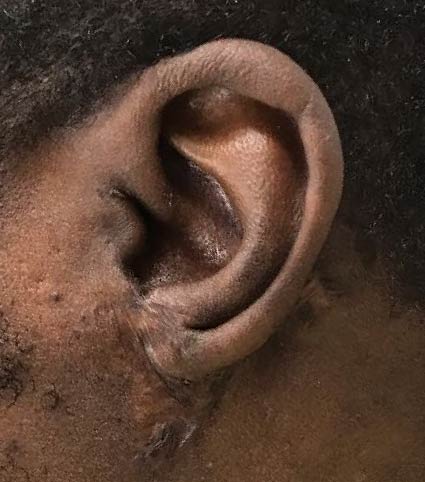
Before
After
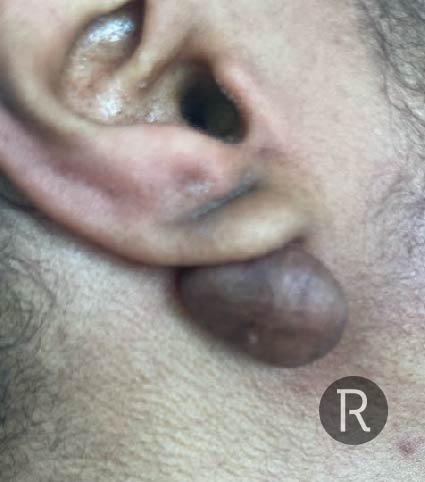
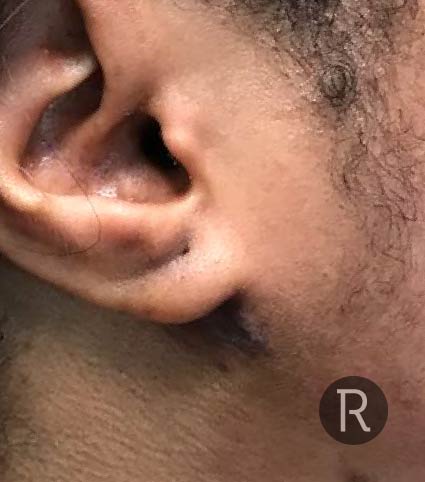
Before
After
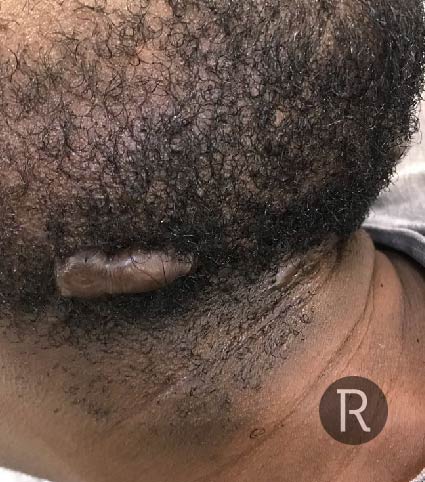
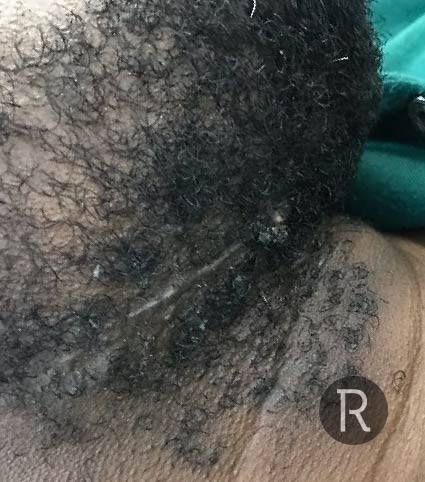
©Individual results may vary.

Flexible payment options for surgical treatment – 0% APR available. Spread the cost of your treatment today!
Terms and Conditions apply. *Acceptance subject to credit status.
Flexible payment options for surgical treatment – 0% APR available. Spread the cost of your treatment today!
Terms and Conditions apply. *Acceptance subject to credit status.
- Steroid Injection – £115 (up to 1ml) per session
- Steroid Injection – £175 (up to 2mls) per session
- Steroid Injection – £225 (up to 3mls) per session
- Steroid Injection w Target Cool – £155 (up to 1ml) per session
- Steroid Injection w Target Cool – £225 (up to 2ml) per session
- Steroid Injection w Target Cool – £275 (up to 3ml) per session
- Flurouracil (5FU) – £165 (up to 1ml) per session
- Flurouracil (5FU) – £275 (up to 2mls) per session
- Flurouracil (5FU) – £325 (up to 3mls) per session
- 5FU (Flurouracil) + Steroid Injection – £245 (up to 1ml) per session
- 5FU (Flurouracil) + Steroid Injection – £310 (up to 2mls) per session
- 5FU (Flurouracil) + Steroid Injection – £375 (up to 3mls) per session
- Nd:YAG Laser – from £200 (per session)
- Exciplex – £45 per session
- Cryotherapy – £150 (1 ampule) per session
- Cryotherapy w Target Cool – £200 per session
- Surgical Excision – POA
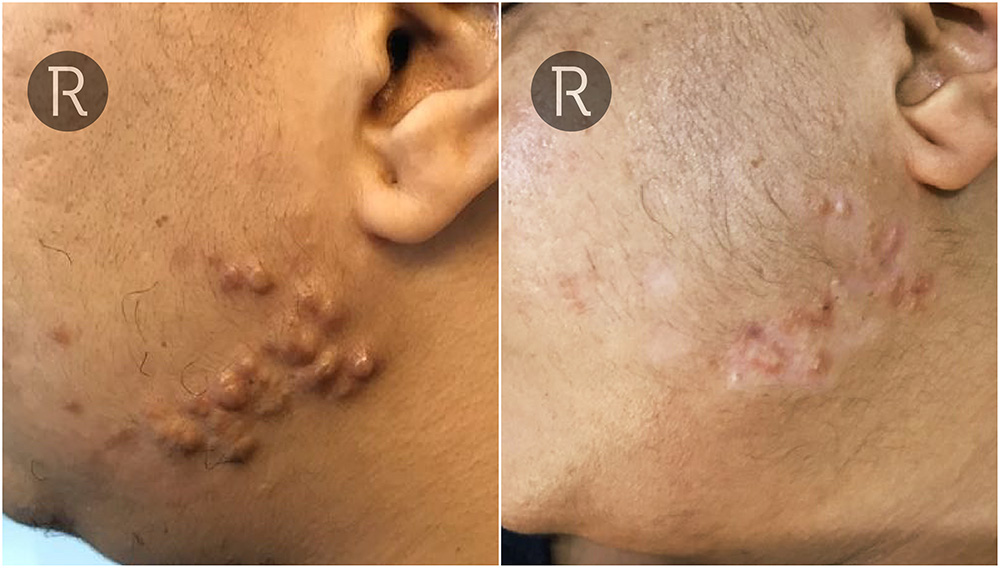
©Individual results may vary.
Acne
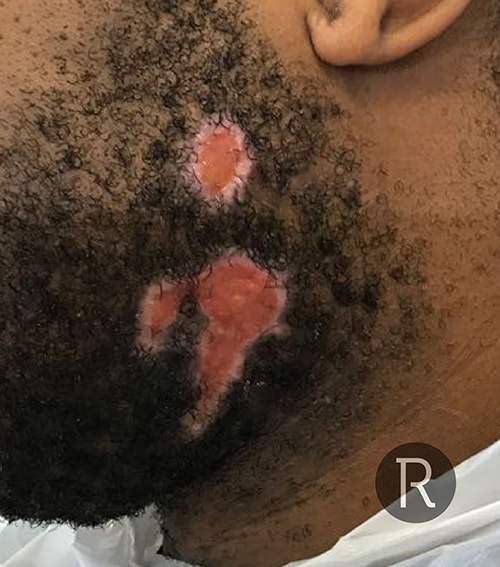
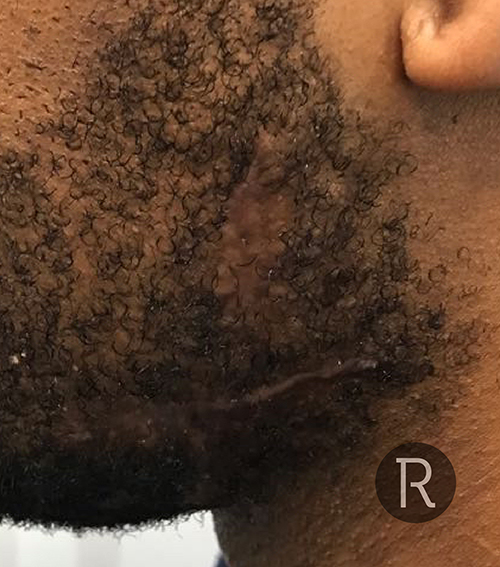
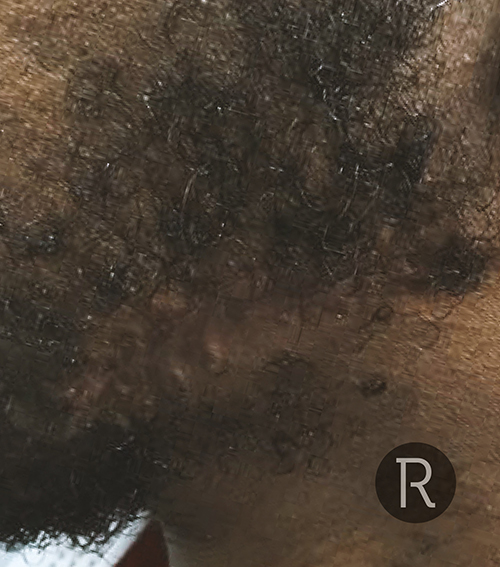
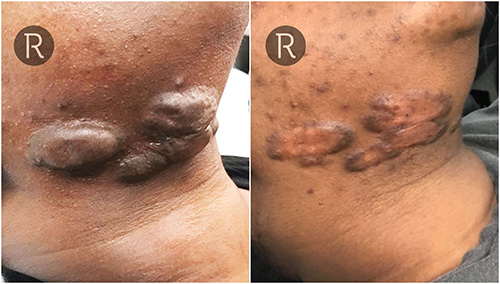
In those susceptible to Keloid scarring, longstanding cystic acne associated with recurrent infections can result in the formation of large aggressive Keloid scars. These typically occur along the jaw line and on the cheeks in both men and women. They are usually the result of a vicious cycle of inflamed acne spots that fill with pus and subsequently ‘pop’ resulting in breaks in the skin that heal in the form of a keloid. As the cycle repeats itself the Keloid scars get further irritated and subsequently get larger.
Ingrown Hairs
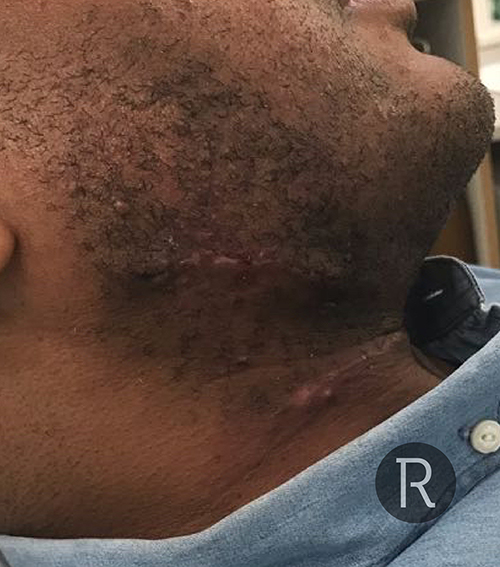
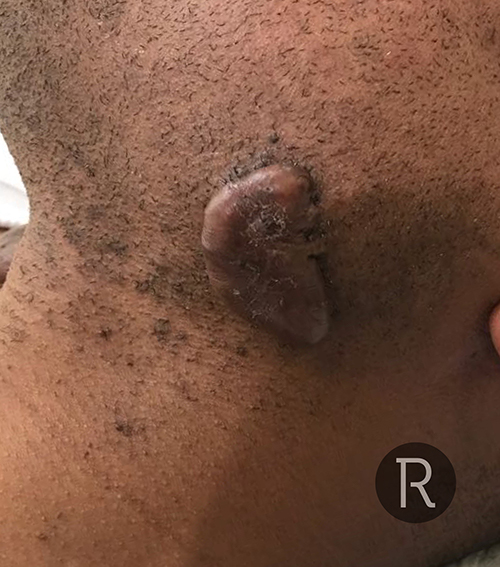
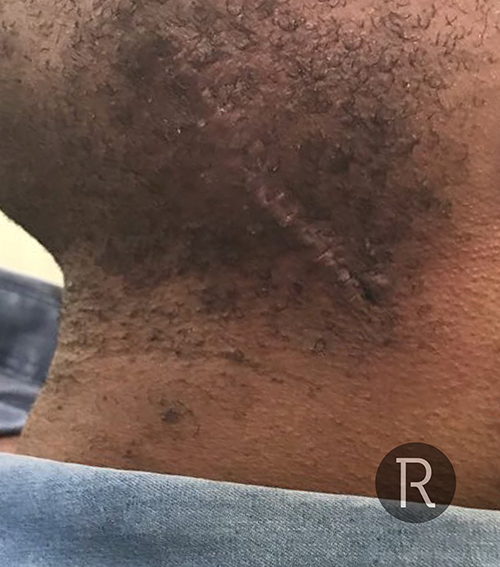
When acne occurs in hair bearing regions of the face, the formation of acne Keloid scars can cause trapping of hairs – ingrown hairs. As these hairs attempt to grow below the skin the body reacts to them eliciting an inflammatory response essentially resulting in a type of folliculitis. This secondary infection or reaction can make Keloid scars even worse. This typically affects men in the beard region but can also affect women suffering from excess hair growth along the jaw line, chin and even the neck.
©Individual results may vary.
Shaving Bumps
©Individual results may vary.
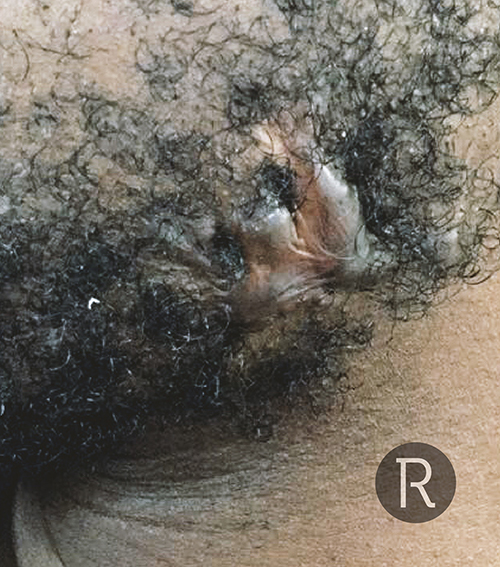
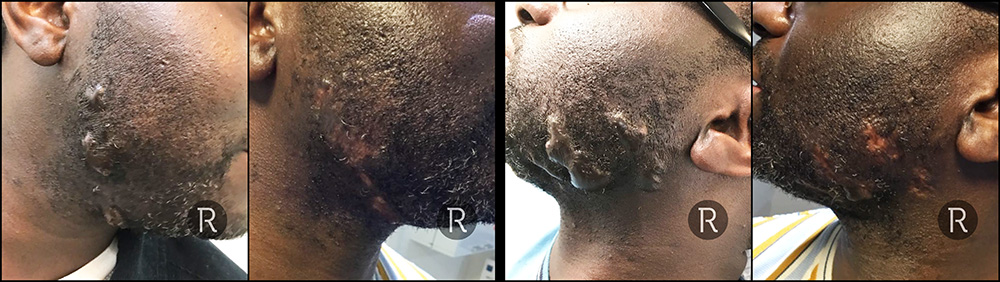
Aggressive shaving, especially for those with very curly hair within the beard can also result in ingrown hairs. When these hairs start to grow under the skin they cause a ’foreign body’ reaction and result in what are typically known as ‘shaving bumps’. The medical term for this is folliculitis – inflammation of the hair follicle. This can be very itchy and irritating and repeated scratching, especially during the night, can cause breaks in the skin and this can subsequently heal in the form of a keloid.
Surgery
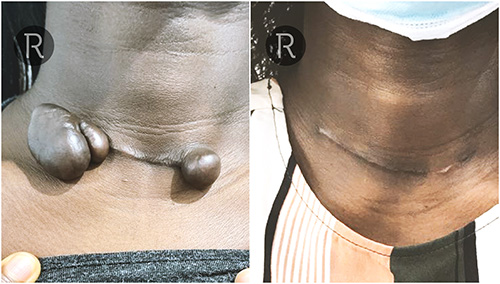
Facial surgery resulting in long scars can eventually become keloid in nature. However, the risk of developing keloids on the face is generally quite low when considered with other parts of the body. Nevertheless this can still happen, hence long-standing regular dosing with steroid injections or 5-FU.
©Individual results may vary.
Flexible payment options for surgical treatment – 0% APR available. Spread the cost of your treatment today!
Terms and Conditions apply. *Acceptance subject to credit status.
Flexible payment options for surgical treatment – 0% APR available. Spread the cost of your treatment today!
Terms and Conditions apply. *Acceptance subject to credit status.
©Individual results may vary.
Piercings
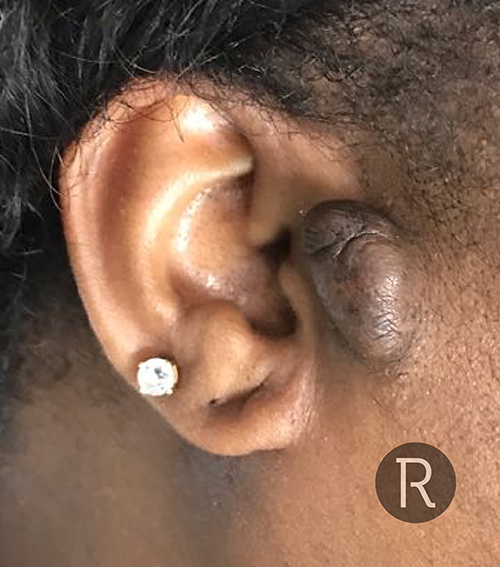
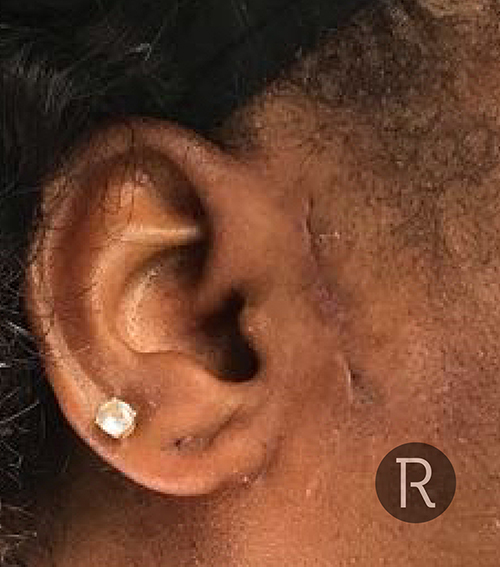
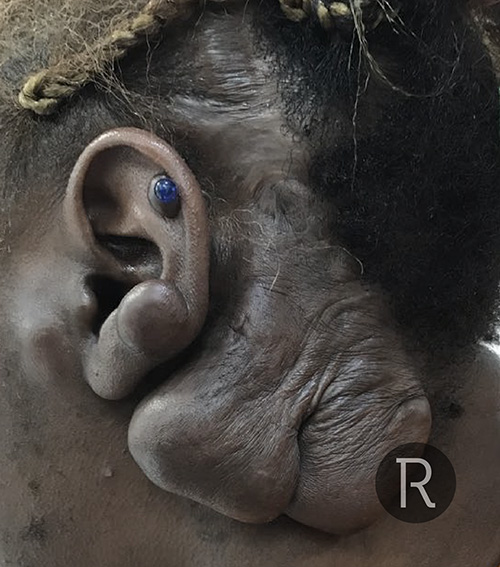
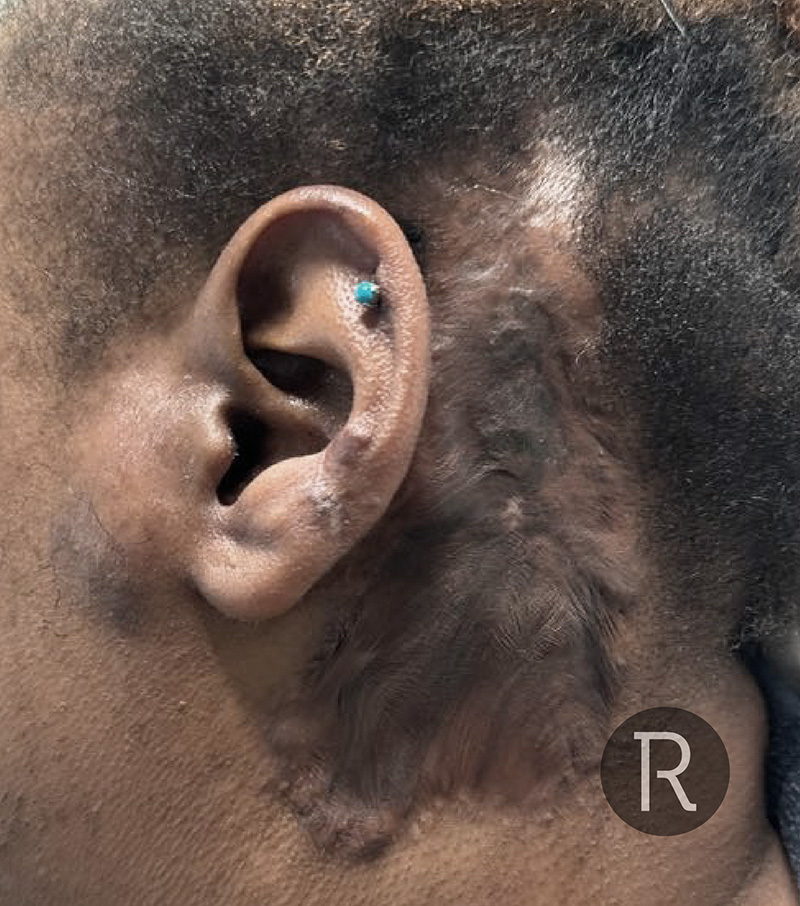
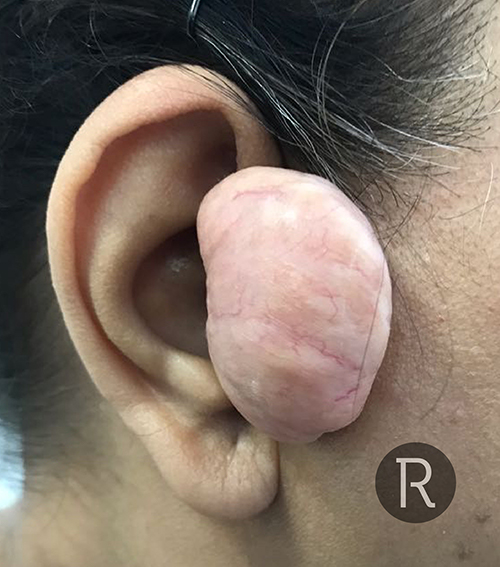
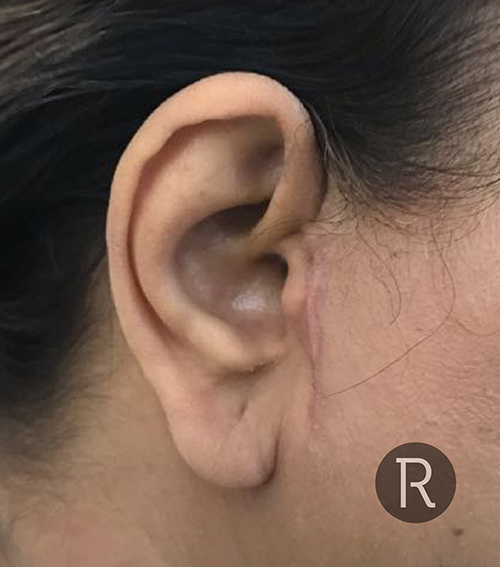
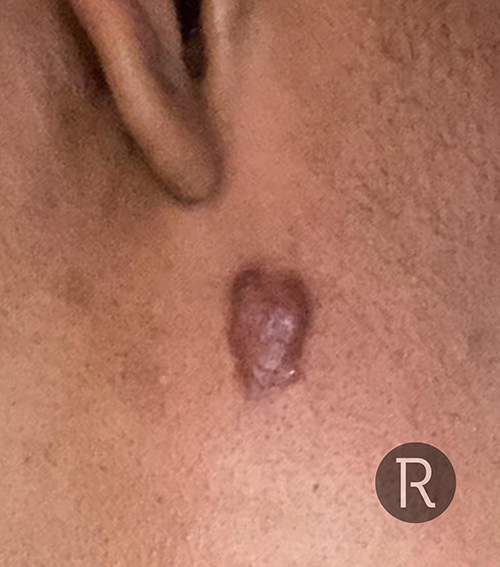
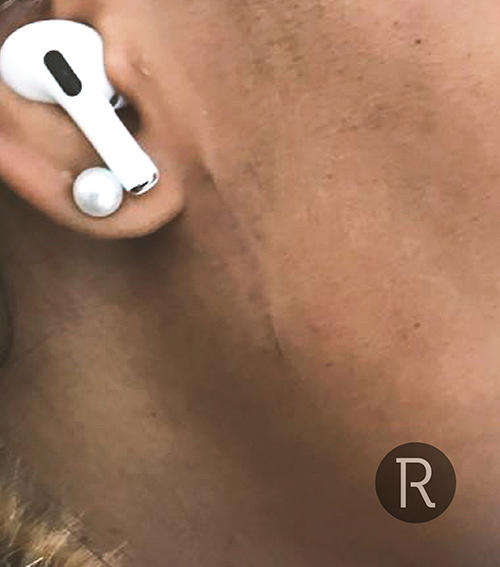
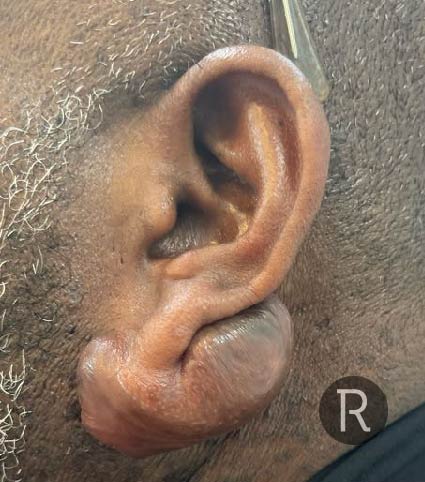
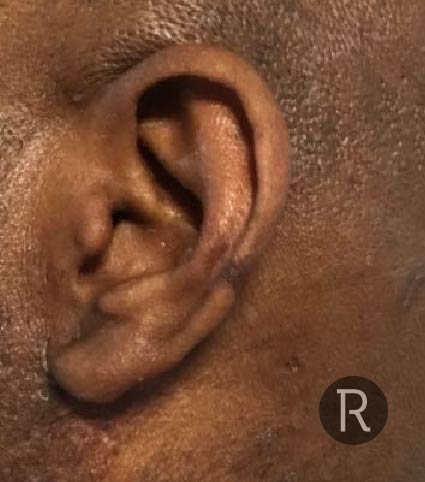
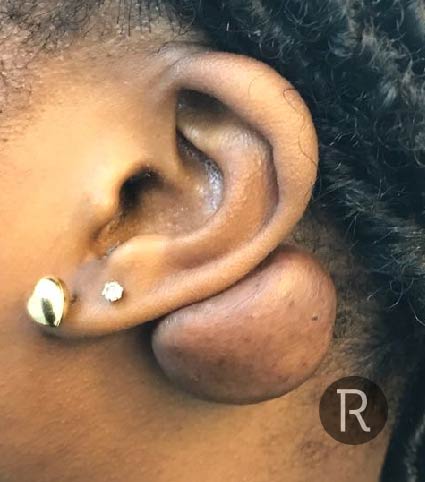
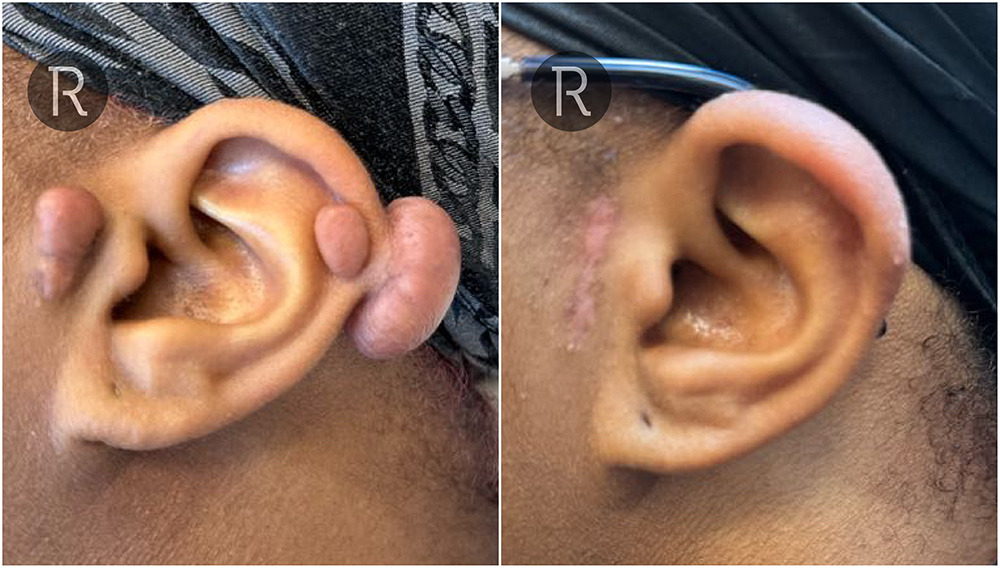
As is the case with keloids on the ear, piercings, especially just in front of the ears (the pre-auricular region), can result in the formation of a keloid. These normally develop just in front of one or both ears and can extend into the ear.
Flexible payment options for surgical treatment – 0% APR available. Spread the cost of your treatment today!
Terms and Conditions apply. *Acceptance subject to credit status.
Flexible payment options for surgical treatment – 0% APR available. Spread the cost of your treatment today!
Terms and Conditions apply. *Acceptance subject to credit status.
- Steroid Injection – £115 (up to 1ml) per session
- Steroid Injection – £175 (up to 2mls) per session
- Steroid Injection – £225 (up to 3mls) per session
- Steroid Injection w Target Cool – £155 (up to 1ml) per session
- Steroid Injection w Target Cool – £225 (up to 2ml) per session
- Steroid Injection w Target Cool – £275 (up to 3ml) per session
- Flurouracil (5FU) – £165 (up to 1ml) per session
- Flurouracil (5FU) – £275 (up to 2mls) per session
- Flurouracil (5FU) – £325 (up to 3mls) per session
- 5FU (Flurouracil) + Steroid Injection – £245 (up to 1ml) per session
- 5FU (Flurouracil) + Steroid Injection – £310 (up to 2mls) per session
- 5FU (Flurouracil) + Steroid Injection – £375 (up to 3mls) per session
- Nd:YAG Laser – from £200 (per session)
- Exciplex – £45 per session
- Cryotherapy – £150 (1 ampule) per session
- Cryotherapy w Target Cool – £200 per session
- Surgical Excision – POA
What treatments are suitable for keloids on the face and neck?
The treatment of keloids in general is often challenging and a long term commitment. Rates of recurrence are relatively high and a preemptive approach is always much more effective than a reactive one. The specific locations of keloids pose different challenges and hence the same approach to treatment is not always appropriate. There are a number of treatment options for keloids on the face and neck and often the best approach is a combination rather than a single treatment.
Intralesional Steroid Injections
Injections of steroid into keloid scars is considered first line treatment. This applies to keloids occurring on the face and neck as well. Injections specifically into the body of the scar are known as intralesional injections and this approach limits complications typically associated with this treatment. The steroid helps to break down collagen scar tissue and also helps to prevent the keloid from growing further. Depending upon the size and number of keloid scars, more than one session of intralesional steroid injections may be needed.
Complications of intralesional steroid injections include skin atrophy (thinning of the skin) and hyperpigmentation (lightening of the colour of the skin). The incidence and severity of these complications are dependent upon the accuracy of the injections, the concentration of steroid used, the number of sessions, as well as the cause of the keloid scars in the first place. Ethnic background can also influence complication rates with hypopigmentation, being particularly troublesome in darker coloured ethnicities such as Afro-Caribbean and Southeast Asian. In contrast, skin atrophy is more of a problem in Caucasian and Middle Eastern skin types.
Intralesional chemotherapy injections
New research has demonstrated the effectiveness of intralesional chemotherapy injections for keloid scars, especially when they are combined with steroids. Chemotherapy injections help to breakdown, collagen scar tissue and have the added advantage of less skin, atrophy and hyperpigmentation as compared with steroids. However, chemotherapy injections are not able to Breakdown keloid scar tissue at the same rate as intralesional steroid injections when used as a standalone treatment. Chemotherapy injections are best used in combination with steroids for particularly aggressive and stubborn keloid scars on the face and the neck.
YAG Laser Treatment
Over the last five years, YAG laser has been found to be very effective for the treatment of hypertrophic and keloid scars. This particular laser is also used for hair removal in darker skin types and generally safe on all skin types. YAG laser helps to break down collagen scar tissue and also has a significant impact on helping to improve the colour of Keloid scars. When combined with intralesional, steroid and chemotherapy injections, excellent results can be achieved for keloids on the face and neck.
YAG laser has the added advantage of being very effective in the destruction of hair follicles and sebaceous glands. As discussed above, often keloid scars on the face and neck can be the result of cystic acne and ingrown hairs from shaving and waxing. By destroying the hair follicles, and sebaceous glands within a keloid scar, the incidence of new acne and/or ingrown hairs is reduced, and hence overall treatment is much more effective with better cosmetic results as well as a lower chance of recurrence.
- Steroid Injection – £115 (up to 1ml) per session
- Steroid Injection – £175 (up to 2mls) per session
- Steroid Injection – £225 (up to 3mls) per session
- Steroid Injection w Target Cool – £155 (up to 1ml) per session
- Steroid Injection w Target Cool – £225 (up to 2ml) per session
- Steroid Injection w Target Cool – £275 (up to 3ml) per session
- Flurouracil (5FU) – £165 (up to 1ml) per session
- Flurouracil (5FU) – £275 (up to 2mls) per session
- Flurouracil (5FU) – £325 (up to 3mls) per session
- 5FU (Flurouracil) + Steroid Injection – £245 (up to 1ml) per session
- 5FU (Flurouracil) + Steroid Injection – £310 (up to 2mls) per session
- 5FU (Flurouracil) + Steroid Injection – £375 (up to 3mls) per session
- Nd:YAG Laser – from £200 (per session)
- Exciplex – £45 per session
- Cryotherapy – £150 (1 ampule) per session
- Cryotherapy w Target Cool – £200 per session
- Surgical Excision – POA
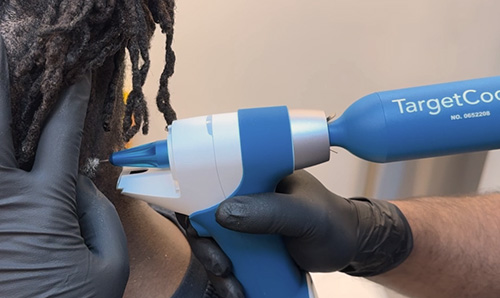
Cryotherapy
Cryotherapy can be used to treat smaller, keloid, scars, resulting from acute flareups of folliculitis. They are particularly effective on the neck, especially for shaving bumps. Again, when combined with intralesional steroid injections, treatments goals can be achieved much faster. For larger keloids, cryotherapy can be slow and painful with a long downtime. They can also result in post-inflammatory hyperpigmentation. In our opinion, cryotherapy would be very much a third or fourth choice for treatment of keloid scars on the face and neck.
Surgery
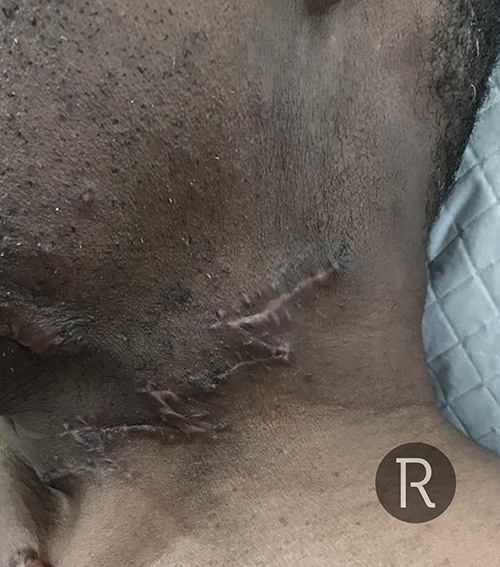
The traditional view of surgery for keloid scars is that it is almost always associated with recurrence and keloids can grow larger than they originally were. Although there is some truth to this statement, surgery can often be very appropriate in certain cases, especially where the keloids are extremely large and causing significant psychological distress, as well as physical symptoms of pain and reduced range of movement. Surgery should always be offered in conjunction with further pre-emptive treatments to try to prevent keloid recurrence, for example, intralesional, steroid injections, and YAG laser post-operatively.
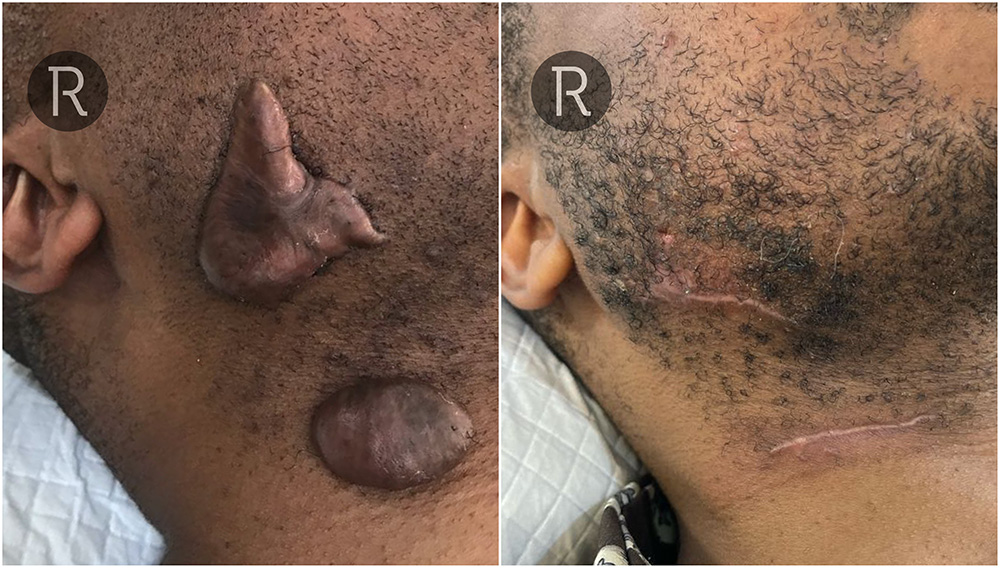
©Individual results may vary.
Flexible payment options for surgical treatment – 0% APR available. Spread the cost of your treatment today!
Terms and Conditions apply. *Acceptance subject to credit status.
Flexible payment options for surgical treatment – 0% APR available. Spread the cost of your treatment today!
Terms and Conditions apply. *Acceptance subject to credit status.
- Steroid Injection – £115 (up to 1ml) per session
- Steroid Injection – £175 (up to 2mls) per session
- Steroid Injection – £225 (up to 3mls) per session
- Steroid Injection w Target Cool – £155 (up to 1ml) per session
- Steroid Injection w Target Cool – £225 (up to 2ml) per session
- Steroid Injection w Target Cool – £275 (up to 3ml) per session
- Flurouracil (5FU) – £165 (up to 1ml) per session
- Flurouracil (5FU) – £275 (up to 2mls) per session
- Flurouracil (5FU) – £325 (up to 3mls) per session
- 5FU (Flurouracil) + Steroid Injection – £245 (up to 1ml) per session
- 5FU (Flurouracil) + Steroid Injection – £310 (up to 2mls) per session
- 5FU (Flurouracil) + Steroid Injection – £375 (up to 3mls) per session
- Nd:YAG Laser – from £200 (per session)
- Exciplex – £45 per session
- Cryotherapy – £150 (1 ampule) per session
- Cryotherapy w Target Cool – £200 per session
- Surgical Excision – POA
Prevention and Recurrence
How can recurrence of face and neck keloids be prevented long term?
Keloids affecting the face and neck have a high risk of recurrence because these areas are constantly exposed to inflammation, friction, grooming practices, and skin conditions such as acne. Effective prevention of recurrence requires treating not only the keloid itself, but also the underlying triggers that cause repeated inflammation. At Rejuvence Clinic, our approach to prevention and recurrence control is based on long-term planning, consistency, and early intervention.
Key points
- Face and neck keloids have a higher risk of recurrence
- Prevention strategies must address underlying triggers
- Long-term planning is central to recurrence control
If you are concerned about recurrence of face or neck keloids, an early consultation helps establish an effective prevention strategy.
Why is controlling acne essential for prevention of keloid recurrence on the face and neck?
Active or poorly controlled acne is one of the most common causes of keloid recurrence on the face and neck. Treating the keloid without addressing active acne significantly reduces the effectiveness of prevention strategies. At Rejuvence Clinic, we strongly recommend managing acne at the same time as treating keloids in order to reduce recurrence risk. We offer a range of acne treatments, including laser-based devices such as Aerolase Neo and Sciton BBL, which can support both acne control and long-term prevention of keloid recurrence.
Key points
- Active acne increases the risk of keloid recurrence
- Acne treatment is essential for effective prevention
- Laser acne treatments support long-term recurrence control
If acne is contributing to your keloids, we can create a combined acne and keloid prevention plan.
How do ingrown hairs and folliculitis affect recurrence and prevention of face and neck keloids?
Ingrown hairs and chronic folliculitis are major drivers of keloid recurrence, particularly along the jawline, beard area, and neck. Repeated follicular inflammation undermines prevention efforts and increases the likelihood of further keloid formation. This is especially relevant in patients with PCOS, where excess hair growth increases ongoing follicular irritation. In these cases, laser hair removal is an important part of a recurrence-prevention strategy.
Key points
- Ingrown hairs increase recurrence risk
- Folliculitis undermines prevention of keloids
- Laser hair removal supports long-term prevention
- PCOS increases susceptibility to recurrence
We offer medically supervised laser hair removal as part of an integrated keloid recurrence-prevention programme.
Can keloids recur after mole excisions or previous laser treatments on the face and neck?
Yes. Recurrence of keloids on the face and neck is commonly seen after mole excisions, surgical procedures, or aggressive laser treatments performed elsewhere. Strong or ablative lasers can sometimes create scars that remain inflamed and prone to ongoing recurrence. Effective prevention of further recurrence requires careful assessment of these scars and specialist-led management.
Key points
- Keloids may recur after mole removal or surgery
- Aggressive or ablative lasers can worsen recurrence
- Specialist input is essential for prevention planning
If you have a recurrent scar following previous procedures, specialist assessment can help guide safe prevention-focused treatment.
Why is ongoing skin care essential for prevention of recurrence in face and neck keloids?
Consistent, appropriate skin care plays a crucial role in the prevention of keloid recurrence on the face and neck. Poor skin barrier function, inappropriate products, or untreated irritation can drive inflammation and undermine recurrence control. At Rejuvence Clinic, we support patients with individualised skin care advice alongside keloid treatment to strengthen prevention strategies.
Key points
- Good skin care reduces inflammation and recurrence risk
- Product selection is important for prevention
- Ongoing advice supports long-term recurrence control
Patients are encouraged to seek regular skin care guidance as part of their keloid prevention plan.
How does our 7-day WhatsApp prevention and recurrence surveillance service support face and neck keloids?
Early detection of change is critical for prevention of recurrence, particularly in visible areas such as the face and neck. All patients are supported through our 7-day-a-week WhatsApp prevention, recurrence, and surveillance service, allowing early review and guidance if a flare begins. This proactive monitoring is central to our recurrence-prevention strategy.
Key points
- 7-day WhatsApp access supports early recurrence detection
- Photo review helps guide prevention-focused intervention
- Early advice reduces the risk of progression
If you notice early changes, contacting the clinic promptly supports effective prevention of recurrence.
What role does the patient play in prevention and recurrence control of face and neck keloids?
Successful prevention of keloid recurrence requires active patient involvement. Patients who engage with acne control, hair-related treatments, skin care, and early communication during flare-ups are more likely to achieve stable, long-term outcomes.
Key points
Patient engagement supports recurrence prevention
Avoiding triggers is essential for long-term control
Maintenance strategies reduce recurrence risk
Working closely with the clinic helps maintain effective prevention and minimise recurrence over time.
Rejuvence Approach
At Rejuvence, we have a wealth of experience in using a variety of treatment modalities to reduce and remove keloid scars on the face and neck. Following an initial assessment, we put together a management plan for all of our clients and this usually involves a combination approach as opposed to a single treatment. This is because combination treatments have been shown to be far more effective with better cosmetic results as well as being longer lasting. We can combine intralesional steroid injections, chemotherapy injections, surgery, and YAG, laser in a variety of combinations, depending on the location, size and cause of a keloid. Most importantly, it is essential to try to complete treatment and not end it prematurely when improvements are especially rapid. This will help to further prevent quick recurrence of symptoms.
Easy to contact us
Keloid scar treatments are often associated with a significant risk of recurrence. Failings of treatment received under the NHS has often been due to lack of access to prompt interventions whenever there is a flareup such as intralesional steroid injections or laser treatment. At Rejuvence Clinic, we ensure all of our clients can contact us easily via WhatsApp or phone to inform us immediately of any minor flare ups so that we can arrange urgent reviews in clinic with our doctors, and if need be, prompt intralesional steroid injections to control recurrence.
Hypopigmentation, following intralesional steroid injections, is usually the result of reduced melanin production associated with leakage of steroid medication into the local lymphatic vascular supply. Hence some areas of the body (for example, the shoulder and back) are more susceptible to hyperpigmentation than others. Melanin is responsible for our skin tone. The more melanin we have the darker skin tone. When melanin production is blocked, skintone returns to its default colour, which is very “white”. This is especially noticeable on darker skin types, whereas on lighter skin types, it is better camouflaged.
Generally complications from intralesional steroid injections, and to a lesser extent, intralesional, chemotherapy injections, are temporary and normally reverse over a period of many months. Reversal of hypo, pigmentation and skin atrophy usually occurs alongside recurrence of the keloid scar.
Skin atrophy associated with intralesional steroid injections can be quite tricky to improve. Skin atrophy is slightly more common in lighter skin types, especially Caucasian and Mediterranean patients as opposed to darker skin tones, originating from Africa and the Caribbean. When skin atrophy occurs, it can present in the form of “pitting” or “dips” in the skin. This usually tends to occur as a delayed effect of steroid treatment between 2 to 4 months afterwards. This is usually the result of residual steroid crystals that form a few weeks after the initial intralesional injection. The higher the concentration of steroid used the greater the risk of skin atrophy occurring.
This can be treated with a combination of normal saline sub dermal washouts followed by the use of specific PLLA filler to help restore the contour and encourage new collagen formation.
As mentioned above, depending on the location and size of the keloid, multiple intralesional steroid injection sessions may be required in order to achieve the best cosmetic result. Intralesional steroid injections can be performed up to 4 weeks apart. At Rejuvence, we often advisor client to go for a combination of YAG, laser and steroid injections
The main complication associated with YAG laser for the treatment of keloid scars on the face and neck is the risk of burns. YAG laser is considered a non-ablative laser as opposed to ablative. This means that it does not result in thermal damage to the top layer of the skin in the same way that is achieved by a CO2 Fraxel laser. Instead, it targets the deep, dermal layers of the skin, resulting in changes to the excess collagen scar tissue within a keloid. However, in certain specific types of keloid, for example, after a piercing, it can result in burns, especially when combined with intralesional steroid injections at the same sitting. At Rejuvence, we have a very conservative approach with a very low complication rate, associated with YAG laser treatment for keloid and hypertrophic scars.
With the focus of the YAG laser treatment being an improvement in the colour of Keloid scars, you often find that a large number of standalone laser sessions are required when compared with intralesional steroid or chemotherapy injections.
At Rejuvence Clinic we have had many patients attend informing us that their dermatologists have started them on oral retinoid tablets. These medications can only be prescribed by dermatologists and are often used for the treatment of severe acne affecting the face and back. They also require careful monitoring with regular blood tests. For regular facial and back acne oral retinoid treatment can be fantastic. However, whilst taking oral retinoid treatment, no dermatological or aesthetic treatments – non-surgical and surgical – can be carried out. This is due to this medication resulting in impaired healing. It has been found that patients suffering with keloids due to acne can have a flare up of their keloids with accelerated growth in size whilst on oral retinoid treatment. We do advise all clients suffering with keloids caution when considering oral retinoid treatment. In addition anyone on oral retinoids cannot have any treatments for at least 6 months after they have stopped this medication.
Dr Sam Ghani
MBBS BSc MRCSEd FRCEM MSc Aesthetic Medicine
GMC: 6103460
https://www.gmc-uk.org/doctors/6103460 (View Dr Ghani’s GMC Registration)
Authored & Reviewed by Dr Ghani
This page was authored by Dr Ghani, a UK-registered medical doctor with extensive experience in aesthetic medicine, regenerative treatments, laser dermatology and minor surgery. Dr Ghani holds a Master’s degree in Aesthetic Medicine and is a Member of both the Royal College of Surgeons of Edinburgh and the Royal College of Emergency Medicine. His clinical focus includes advanced injectable treatments, energy-based devices, regenerative medicine applications and evidence-based aesthetic care. Dr Ghani is known for combining strong academic knowledge with meticulous clinical standards, ensuring patient safety and natural, clinically appropriate outcomes.
Posted on Google
 Sophia12 September 2026
Trustindex verifies that the original source of the review is Google.
A massive thank you to Dr Ghani, Dr Mitha and Olga, who have looked after me for various cosmetic and hair procedure. I highly recommend this clinic to anyone looking for professional, knowledgeable and caring doctors and staff. The reception team are also absolutely lovely, polite, welcoming and friendly.Posted on Google Arpan Kumar11 September 2026
Trustindex verifies that the original source of the review is Google.
The doctor and healthcare professional doing the surgery were lovely and made me feel comfortable throughout the procedurePosted on Google Bisi Dauda11 September 2026What an incredible experience! The modern facilities at Rejuvence Clinic are state-of-the-art. The staff's professionalism and the personalized treatment I received were outstanding. Follow-up care was thorough, and the aftercare support was reassuring.Posted on Google
 THY11 September 2026I can't thank Rejuvence enough for their brilliant service! My steroid injections eased my pain significantly. The team's professionalism and the state-of-the-art facilities were impressive. The follow-up care was just the cherry on top! 🌟Posted on Google
 Jack Ho10 September 2026The nurses are very helpful and Dr Sam Ghani is thoughtful and understands my needs for scar removal.Posted on Google
 Mahamed Hagar10 September 2026Rejuvence Clinic exceeded my expectations! The keloid removal was a breeze, and the staff's professionalism was top-notch. Follow-up care was attentive and reassuring. Truly a fantastic experience from start to finish! Dr Ghani and Paige thank you.Posted on Google
 Tochi Madubuike10 September 2026Absolutely delighted with Rejuvence! The steroid injections were super effective, and the staff's professionalism was evident from start to finish. Their follow-up care was incredibly thorough. I can't recommend them enough for anyone in need!Posted on Google
 Aziah Brown8 September 2026Amazing experience, all the staff are kind and helpful would recommend if need any cosmetic surgery done.Posted on Google
 Daniel Brandão6 September 2026I saw Doctor Sam Ghani for my alopecia problem and he was amazing. The treatment was effective. All the staff is friendly, helpful and professional. Highly recommend.Posted on Google
 Kurt King3 September 2026Dr Ghani was really informative and took the time to answer all of my questions and concerns. I left the clinic feeling like I actually understood my options and could make the right decision about what treatment to have. Really appreciated him taking the time to explain everything properly. I’ll definitely be back and would happily recommend him to anyone considering treatment.