















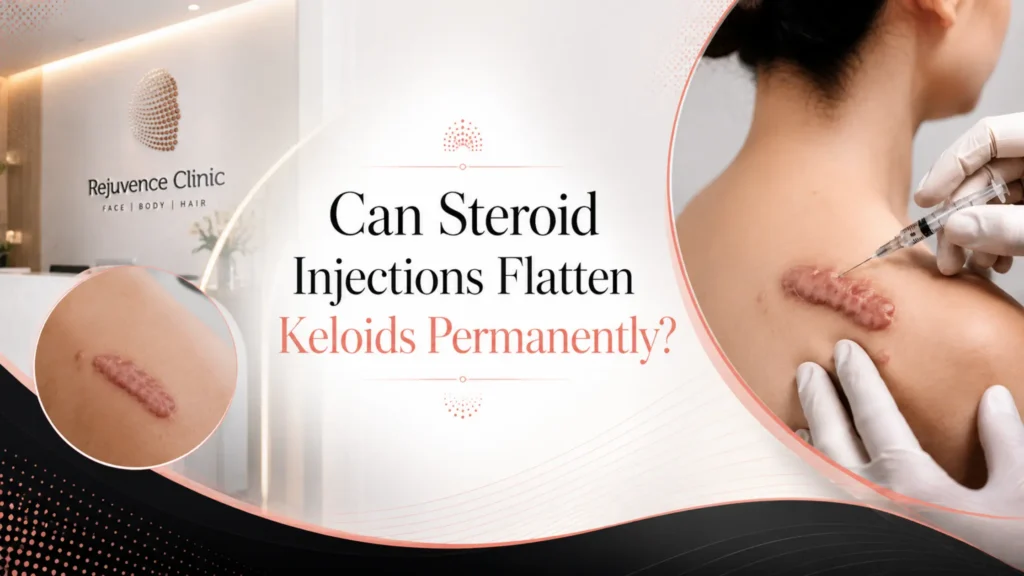
No, steroid injections provide temporary keloid improvement rather than permanent flattening. Most patients experience 60-80% reduction in keloid size with regular injections, but keloids typically regrow within 12-18 months after treatment stops.
Understanding steroid limitations and maintenance requirements helps set realistic expectations about this widely used keloid treatment option.
How Steroid Injections Work on Keloids
Intralesional steroids address keloid pathology through multiple mechanisms. Understanding how they work explains why results require maintenance.
Anti-inflammatory Action
Steroids suppress inflammatory cytokines driving keloid growth. They reduce the excessive immune response characterising keloid formation. Inflammation reduction creates an environment where normal healing can occur. This explains why itching and pain often resolve before visible size reduction.
Collagen Production Inhibition
Steroids inhibit fibroblast activity reducing excessive collagen deposition. This slows the continuous keloid growth pattern. Without ongoing steroid presence, fibroblasts resume their abnormal excessive collagen production once treatment stops.
Vascularity Reduction
Steroids decrease blood vessel density within keloid tissue. Reduced blood flow means fewer inflammatory cells reaching the keloid. This mechanism explains why combination treatments with laser targeting vascularity works synergistically.
Flattening Results with Steroids
Most patients achieve significant improvement during active treatment. However, results plateau rather than reach permanent cure.
Typical Flattening Timeline
Initial improvement typically appears within 2-4 weeks of first injection. Maximum flattening usually occurs between 3-6 months with regular treatment. Medical research demonstrates most patients notice 60-80% size reduction from baseline measurements.
Degree of Improvement
Complete flattening occurs in 20-30% of patients. Substantial improvement (50-80% reduction) occurs in 40-50%. Minimal improvement (less than 30% reduction) occurs in remaining patients. Individual response varies significantly by age, skin type, and keloid characteristics.
Limitation of Steroids Alone
Steroid injections alone rarely achieve permanent results. They represent a management approach rather than a cure. Understanding recurrence patterns helps patients understand why maintenance proves essential.
Why Steroids Don’t Provide Permanent Flattening
Keloids possess fundamental abnormal healing tendencies that steroids suppress but don’t eliminate. Understanding this explains recurrence after treatment stops.
Persistent Genetic Programming
Keloid-prone individuals maintain a lifelong scarring tendency. Steroids suppress expression of this tendency but don’t change underlying genetics. When steroid levels drop, abnormal healing responses resume.
Fibroblast Re-activation
Steroid-suppressed fibroblasts remain present even during excellent treatment response. They represent dormant rather than eliminated cells. Once steroid withdrawal occurs, these cells resume excessive collagen production within weeks to months.
Inflammatory Memory
Keloid tissue maintains inflammatory memory that steroids temporarily suppress. Re-exposure to inflammatory triggers can rapidly reactivate keloid growth. This explains why some patients experience faster recurrence after treatment stops.
Treatment Duration and Maintenance
Ongoing steroid injections maintain improvements indefinitely. Understanding maintenance requirements guides long-term planning.
Initial Treatment Phase
Standard protocols involve 4-6 injections spaced 4-6 weeks apart. This establishes baseline improvement before maintenance begins. Some aggressive keloids require 6-8 sessions for adequate initial response.
Maintenance Requirements
After achieving desired improvement, maintenance injections every 2-3 months sustain results. According to NHS guidance, skipping maintenance allows regrowth within 12-18 months. Most patients accept this ongoing commitment for durable symptom relief.
Cost Considerations
Treatment costs accumulate over years with regular maintenance. Monthly injections cost £115-£275 per session. Annual maintenance typically costs £500-£1,500 depending on frequency. This represents significant long-term investment compared to one-time surgical approaches.
Factors Affecting Steroid Response
Individual characteristics predict treatment success. Understanding these helps set appropriate expectations.
Keloid Age and Size
Newer, smaller keloids respond better than established, large keloids. Keloids present less than 1-2 years show 70-80% response rates. Larger keloids (>10cm) show only 40-50% response. Early intervention optimises outcomes.
Skin Type Impact
Darker skin types generally show a good steroid response. However, steroid-induced hypopigmentation (lightening) can occur in darker skin patients, creating visible colour mismatch. This represents a trade-off requiring patient counselling.
Location Considerations
Keloids on high-tension areas (chest, shoulders) show higher recurrence. Lower-tension areas (earlobe) show more stable results. Location influences both initial response and maintenance requirements.
Combining Steroids with Other Treatments
Multi-modal approaches produce better results than steroids alone. Combining treatments addresses multiple keloid pathways.
Steroid Plus Pressure Therapy
Pressure garments combined with steroid injections enhance flattening effects. Compression reduces inflammatory mediator accumulation complementing steroid action. This combination maintains improvements better than steroids alone.
Steroid Plus Laser Treatment
Laser targeting keloid vascularity combined with steroids addresses multiple mechanisms simultaneously. Laser reduces blood flow whilst steroids suppress inflammation. This combination achieves 80-90% success in many cases.
Steroid Plus Surgical Excision
Post-surgical steroid injections dramatically reduce recurrence rates. Surgery removes keloid tissue whilst post-operative steroids suppress renewed growth. This combination achieves best outcomes for permanent improvement.
Permanent Alternatives to Steroid-Only Treatment
Combining approaches produces more durable results than steroid monotherapy.
Surgical Excision with Adjunctive Therapy
Surgery combined with post-operative steroids achieves 70-80% permanent improvement. Adjunctive laser or radiation further reduces recurrence. Professional dermatological assessment helps determine if this multi-modal approach suits your keloid characteristics.
Laser Therapy Outcomes
Advanced laser protocols achieve 10-20% recurrence rates compared to 30-50% with steroids alone. Laser therapy represents a permanent option for many patients seeking to avoid indefinite maintenance.
Managing Expectations About Permanence
Setting realistic expectations prevents disappointment and guides treatment decisions.
Accepting Maintenance Reality
For most patients, viewing keloid treatment as ongoing management rather than cure proves realistic. Accepting maintenance requirements allows satisfaction despite lack of permanent cure. Many patients willingly accept this trade-off.
Quality of Life Perspective
Steroid injections significantly reduce itching and pain within weeks. Cosmetic improvement allows patients to wear desired clothing and styles. Psychological relief often represents the greatest benefit despite lack of permanence.
When to Consider Permanent Options
Patients unable or unwilling to commit to indefinite maintenance should discuss surgical, laser, or combined approaches with specialists. These provide a better chance of permanent improvement though carry higher initial cost and recovery time.
Conclusion
Steroid injections flatten keloids substantially during active treatment but provide temporary results requiring indefinite maintenance. Most patients achieve 60-80% improvement with regular injections yet experience regrowth within 12-18 months after stopping. Combining steroids with other modalities or pursuing permanent treatment options like surgery may better serve patients seeking durable improvement.
Rejuvence Clinic offers comprehensive keloid management combining steroids, laser, and surgical approaches to achieve optimal outcomes tailored to individual needs.
Frequently Asked Questions
How long do steroid injections flatten keloids?
Maximum flattening occurs within 3-6 months of starting regular injections. Results are maintained indefinitely with ongoing monthly or bi-monthly injections. Keloids typically begin regrowing within 12-18 months after treatment stops as steroid suppression wears off.
Can steroid injections make keloids worse?
Rarely, poorly performed injections causing trauma or infection can worsen keloids. Using incorrect steroid concentrations or injection frequency may reduce effectiveness. Proper technique by experienced practitioners ensures good outcomes without worsening. If keloids worsen despite proper treatment, consult your specialist.
What’s the success rate of steroid injections for keloids?
60-80% of patients achieve substantial improvement (50%+ size reduction). 20-30% achieve complete flattening. Success depends on keloid age, size, location, and patient skin type. Newer, smaller keloids show best response rates approaching 80%.
Do I need steroid injections forever to maintain results?
Yes, indefinite maintenance typically proves necessary once treatment stops. Skipping injections allows regrowth within 12-18 months. Some patients achieve long periods without injections after years of treatment, but consistent maintenance works best. Discuss long-term plans with your specialist.
Can steroid injections prevent keloid recurrence after surgery?
Yes, post-surgical steroids significantly reduce recurrence. Injections within 2-4 weeks of surgical excision reduce recurrence from 50-80% to 20-30%. This combined approach provides substantially better permanent outcomes than steroid monotherapy.
Are there permanent alternatives to steroid injections?
Yes, surgical excision with adjunctive therapy achieves permanent improvement in 70-80% of cases. Advanced laser protocols show 10-20% recurrence rates versus 30-50% with steroids alone. Discuss these alternatives if indefinite maintenance isn’t acceptable.
What happens if I stop steroid injections?
Keloids typically begin regrowing within 2-3 months after stopping injections. Regrowth accelerates over 12-18 months returning to near-baseline size. Early resumption of injections prevents major regrowth. This cycle illustrates steroid treatment as management rather than cure.