
















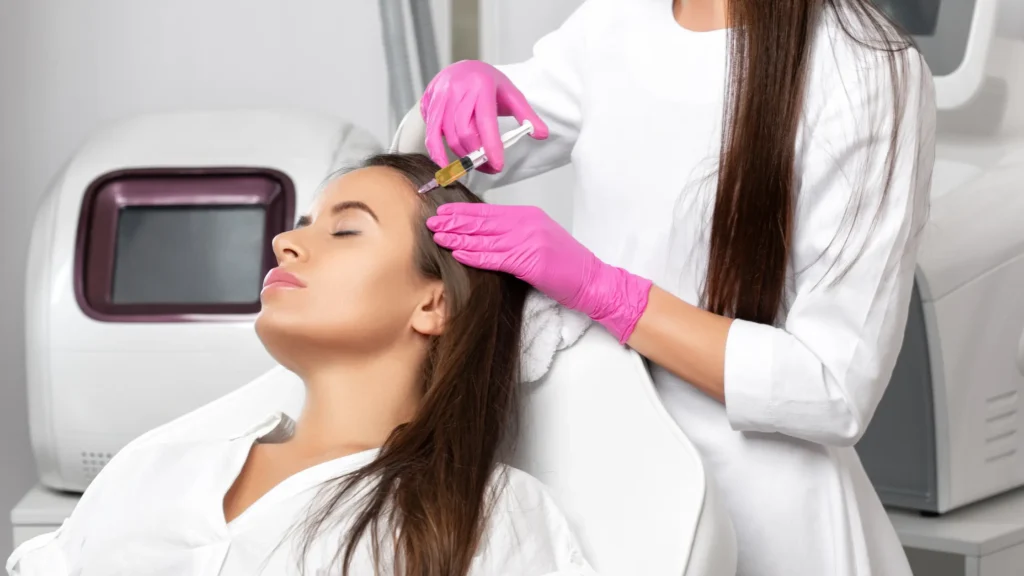
Hair loss affects millions of people across the UK, prompting many to explore treatment options to restore their confidence. Platelet-Rich Plasma (PRP) therapy has emerged as a popular regenerative treatment for hair restoration, but questions remain about its accessibility through the NHS.
Understanding whether the NHS covers PRP is essential for anyone considering this approach to combating hair loss.
Understanding PRP Hair Treatment and NHS Coverage
The straightforward answer: The NHS does not typically offer PRP hair treatment as a standard procedure.
PRP is classified as a cosmetic treatment rather than a medical necessity. According to NHS guidelines, most hair restoration procedures are elective and fall outside NHS coverage unless there are exceptional medical circumstances.
If you’re seeking PRP hair treatment at Rejuvence Clinic, we provide comprehensive private treatment options tailored to your specific needs. We’re a CQC-registered facility in Canary Wharf with a 4.8/5 rating from 439+ verified reviews.
Key points about NHS coverage:
- NHS focuses on treating underlying medical conditions, not cosmetic restoration
- Treatment provided only when hair loss results from medical conditions like alopecia areata or chemotherapy
- PRP for pattern baldness is not NHS-funded
- NHS may provide wigs or counseling for significant hair loss
- Private treatment is required for PRP therapy
Important: If experiencing sudden or severe hair loss, consult your GP first to rule out medical conditions.
Disclosure: Rejuvence Clinic offers private PRP treatment. This article provides balanced information about both NHS and private options.
Why the NHS Does Not Fund PRP Hair Treatment

The National Institute for Health and Care Excellence (NICE) evaluates treatments before NHS approval. PRP hasn’t been widely adopted due to several factors.
Limited Clinical Evidence for NHS Approval
The NHS requires extensive, high-quality clinical trials before funding treatments. While studies show promising results for PRP therapy, the evidence hasn’t yet met NHS commissioning standards. Current research shows varying success rates, making it difficult to justify widespread public funding.
What this means: Approximately 60-70% of patients see improvement, but results vary significantly.
Classification as a Cosmetic Procedure
The NHS distinguishes between medical necessity and cosmetic enhancement. Pattern baldness is typically classified as cosmetic, placing PRP in the same category as other aesthetic procedures individuals must fund privately.
Cost Considerations and Resource Allocation
PRP requires multiple sessions over several months with specialized equipment. The cumulative cost would place substantial strain on NHS budgets.
Typical costs: £1,500-2,400 for initial treatment (3 sessions), plus ongoing maintenance every 9-12 months.
Availability of Alternative NHS Treatments
The NHS provides alternatives for specific types of hair loss:
- Alopecia areata: topical corticosteroids or immunotherapy
- Hormonal hair loss: finasteride for men
- Underlying conditions: treatment of thyroid disorders, nutritional deficiencies
These have more extensive research backing and lower costs than PRP.
Focus on Underlying Medical Conditions
When the NHS intervenes, the focus is diagnosing and treating underlying causes of thyroid disorders, iron deficiency, autoimmune conditions. Once addressed, hair may regrow naturally without cosmetic intervention.
Consult your GP: Discuss whether your hair loss has an underlying medical cause the NHS can treat.
Lack of Standardized Treatment Protocols
PRP lacks universal standards for platelet concentration, treatment frequency, and injection techniques. This makes it challenging for the NHS to establish consistent guidelines.
Benefits and Considerations of Private PRP Hair Treatment
Private PRP offers several advantages for those experiencing hair loss. At Rejuvence Clinic, we use advanced systems including Magellan TruPRP™ and Angel Arthrex™. We’re also the first UK clinic to offer Exosmart™ autologous exosome therapy.
About Rejuvence: CQC-registered facility led by Dr Samuel Ghani. Specializing in regenerative medicine with 4.8/5 rating from 439+ verified reviews.
Natural and Minimally Invasive Approach
PRP uses your body’s own healing mechanisms. Blood is drawn, processed to concentrate platelets, and injected into the scalp. This minimizes allergic reaction risks since it’s your own blood.
Stimulation of Hair Follicle Growth
Concentrated platelets contain growth factors that activate dormant follicles and prolong the growth phase. Studies show PRP can increase hair density and thickness, though results typically take 3-6 months to appear.
Realistic expectations: Approximately 20% increase in hair thickness after 3 sessions over 3 months.
Minimal Downtime and Recovery
Unlike hair transplant surgery, PRP requires no significant recovery. Most experience only mild redness for 24-48 hours. Return to normal activities immediately.
Complementary to Other Hair Loss Treatments
PRP works well with topical minoxidil, oral finasteride, or supplements. At Rejuvence, we combine PRP with medications and our Replenology™ vitamin system for comprehensive treatment.
Customizable Treatment Plans
Private clinics tailor protocols to individual needs adjusting platelet concentration, injection depth, and frequency based on your specific hair loss and response.
Long-Term Hair Health Improvement
Beyond regrowth, PRP improves scalp health by enhancing blood circulation. Patients often report improvements in hair texture, strength, and shine.
Professional Expertise and Quality Control
Specialized clinics use medical-grade equipment and trained professionals. At Rejuvence, our systems guarantee platelet concentrations 5+ times baseline crucial for effectiveness. Research shows PRP must achieve 4-5 times concentration to work.
Consult a specialist: Schedule a consultation at a CQC-registered clinic to discuss suitability and realistic expectations.
What Hair Loss Treatments Does the NHS Provide?
While PRP isn’t available, several options may be accessible depending on your diagnosis.
NHS-approved treatments:
- Topical minoxidil (often purchased over-the-counter)
- Finasteride tablets for men (prescription in some circumstances)
- Corticosteroid injections or creams for alopecia areata
- Treatment of thyroid disorders, iron deficiency, hormonal imbalances
- Dermatology referrals for persistent conditions
- Counseling and psychological support
- NHS wigs for complete or significant hair loss
First step: Book a GP appointment if experiencing hair loss. They can run blood tests to rule out treatable conditions.
| Treatment Type | NHS Available? | Cost to Patient |
| PRP Therapy | No | £300-800 per session (private) |
| Minoxidil | Limited | £20-40/month (OTC) |
| Finasteride | Prescription possible | £9.90 per item (England) |
| Corticosteroids | Yes | Free on NHS |
| Medical Wigs | Yes | Free or subsidized |
| Dermatology | Yes | Free (GP referral required) |
| Blood Tests | Yes | Free on NHS |
Conclusion
PRP hair treatment remains unavailable through the NHS as it’s classified as a cosmetic procedure without sufficient evidence for public funding. While disappointing for those hoping to access treatment through the NHS, private clinics offer comprehensive PRP therapy with personalized plans.
If experiencing hair loss, consult your GP to identify any NHS-treatable conditions. Private options like PRP provide additional pathways to restoration.
References
[1] NHS. Hair Loss. nhs.uk/conditions/hair-loss
[2] NICE. Technology Appraisals. nice.org.uk
[3] Clinical studies from peer-reviewed dermatology journals
[4] Regenerative medicine literature on PRP efficacy