
















Keloids affect a significant portion of the UK population, though prevalence varies dramatically by ethnicity and skin type.
Understanding who is most at risk and why keloids develop helps patients recognise early warning signs and seek appropriate treatment.
This article examines keloid prevalence in the UK, demographic patterns, and what influences your personal risk.
Understanding Keloid Prevalence in the UK
Keloid scars are more common than many people realise, affecting approximately 10-15% of the UK population overall. However, this figure masks significant variation between different demographic groups.
Overall Population Statistics
Research indicates keloids affect between 4.5% and 16% of people globally depending on ethnicity and geographical location. In the UK’s diverse population, overall prevalence sits around 10-15% when accounting for all ethnic groups.
These figures represent diagnosed keloids only, meaning actual prevalence may be higher as many people don’t seek medical treatment for small or non-symptomatic scars.
Why Keloids Appear More Common Now
Keloid awareness has increased significantly in recent years due to better medical recognition and patient education. Social media and health information access means more people recognise keloid scars rather than dismissing them as “bad scarring”.
Additionally, the UK’s increasingly diverse population includes more people from high-risk ethnic groups, making keloids more visible in healthcare settings.
Ethnicity and Keloid Risk in the UK
Ethnicity represents the single strongest risk factor for keloid development. Genetic factors influence how skin responds to injury and healing.
Afro-Caribbean Populations
People of Afro-Caribbean descent show the highest keloid prevalence, affecting 15-20% of this population. This represents approximately 15-20 times higher risk compared to white European populations. The genetic predisposition relates to differences in fibroblast activity and collagen production during wound healing.
Asian Populations
South Asian, East Asian, and Southeast Asian populations show intermediate keloid risk, affecting approximately 5-10% of individuals. Chinese, Indian, Pakistani, and Bangladeshi communities in the UK experience significantly higher keloid rates than white British populations.
This demographic shift in UK population composition means keloid treatment demand has increased substantially over recent decades.
White European Populations
White British and European populations show the lowest keloid prevalence at approximately 0.09-1% depending on specific ethnic background. Celtic and Northern European ancestry confers lowest risk. However, keloids do occur in white populations, particularly following burns, surgical incisions, or significant trauma.
Common Locations for Keloids in UK Patients
Keloid location patterns remain consistent across ethnicities, though certain areas prove more problematic. Understanding common sites helps patients monitor high-risk areas after injury or surgery.
| Location | Prevalence | Risk Factors |
| Earlobes | 40-45% | Piercings, particularly multiple or cartilage piercings |
| Chest/Sternum | 20-25% | Acne, surgery, trauma |
| Shoulders | 15-20% | Vaccination sites, acne, sports injuries |
| Upper Arms | 10-12% | Vaccination scars, minor trauma |
| Jaw/Neck | 8-10% | Acne, shaving trauma |
| Upper Back | 5-8% | Acne, friction from clothing |
Ear Keloids
Ear keloids represent the most common keloid location seen at Rejuvence Clinic, accounting for approximately 40% of cases. These typically develop following ear piercing, with higher risk from cartilage piercings or piercing guns. Young women show highest rates due to ear piercing popularity, though men with ear piercings also develop keloids.
Chest and Shoulder Keloids
The anterior chest and shoulders represent high-tension areas where keloids commonly develop. Acne scars on the chest frequently progress to keloids in susceptible individuals. Vaccination sites on shoulders occasionally trigger keloid formation, particularly BCG vaccine scars which can become quite prominent.
Facial and Neck Keloids
Facial keloids most commonly develop from acne, particularly along the jawline and neck. These prove particularly distressing due to visibility and social impact. Shaving trauma in men occasionally triggers keloid formation along the jaw and neck area.
Age and Gender Patterns in UK Keloid Cases
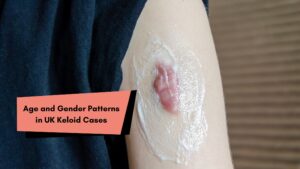
Keloid development shows distinct patterns related to age and gender. These patterns help identify highest-risk periods for preventive measures.
Peak Age for Keloid Development
Keloids most commonly develop between ages 10-30 years when skin healing responses are most vigorous. Adolescence and early adulthood represent peak risk periods due to hormonal changes, acne, and activities like piercing.
Children under 10 rarely develop keloids, whilst new keloid formation after age 50 is uncommon though existing keloids may continue growing.
Gender Differences
Women show slightly higher keloid rates than men, though this likely reflects higher ear piercing rates rather than true biological difference. Studies suggest approximately 60% of keloid patients are female.
However, men with keloids often present with larger, more severe cases, possibly due to delayed treatment-seeking behaviour.
Hormonal Influences
Pregnancy and puberty appear to influence keloid growth in some patients. Existing keloids may enlarge during pregnancy, possibly due to hormonal changes affecting collagen production. Some women report keloid development or worsening during pregnancy or following contraceptive pill use, though research evidence remains limited.
Common Triggers for Keloids in the UK
Understanding what triggers keloid formation helps high-risk individuals take preventive measures. Certain injuries carry higher keloid risk than others.
Ear Piercing
Ear piercing represents the single most common keloid trigger in the UK, particularly among young women. Piercing guns cause more trauma than needles, increasing ear keloid risk. Cartilage piercings carry higher risk than lobe piercings due to increased inflammation and healing complexity.
Acne Scarring
Chest and back acne frequently progresses to keloid formation in susceptible individuals. Severe or prolonged acne creates multiple injury sites, increasing keloid probability. Picking or squeezing acne lesions worsens scarring and keloid risk significantly.
Surgical Incisions
Planned surgery carries keloid risk, particularly on chest, shoulders, and ears. Caesarean sections occasionally trigger keloid formation in susceptible women. Plastic surgery patients with keloid history require special precautions to prevent scar complications.
Why Some People Develop Keloids and Others Don’t
Keloid formation involves complex interactions between genetics, immune response, and healing factors. Understanding these mechanisms helps explain individual variation.
Genetic Predisposition
Family history strongly predicts keloid risk, with studies showing 5-10 times higher risk if a first-degree relative has keloids. Specific genetic variants affecting collagen production and immune response increase susceptibility.
However, genetics alone doesn’t guarantee keloid development; environmental triggers are also required.
Immune System Factors
Keloid-prone individuals show altered immune responses during wound healing. Excessive inflammatory response and prolonged immune activation contribute to abnormal scar formation. Some research suggests autoimmune conditions may correlate with increased keloid risk, though evidence remains inconclusive.
Wound Healing Variations
People who develop keloids show increased fibroblast activity and excessive collagen production during healing. Normal scar formation balances collagen production with breakdown, whilst keloids show continuous collagen accumulation. Growth factor dysregulation and abnormal cellular signalling drive this process.
Geographic Distribution Within the UK
Keloid prevalence varies across UK regions primarily reflecting population demographics. Areas with diverse populations see higher keloid rates.
London and Major Cities
London shows the highest keloid prevalence in the UK due to a diverse population including large Black African, Afro-Caribbean, and Asian communities. Major cities like Birmingham, Manchester, and Leeds similarly show elevated rates. Urban areas with specialist keloid clinics like Rejuvence Clinic in Canary Wharf serve these populations.
Regional Variations
Rural areas and regions with predominantly white British populations show lower keloid prevalence. Scotland, Wales, and Northern Ireland generally report fewer keloid cases than England. However, immigrant populations in these regions show similar keloid rates to their ethnic group averages regardless of location.
Access to Treatment
Geographic location affects treatment access more than keloid prevalence itself. London offers most specialist keloid services, whilst other regions have limited options. Many patients travel to London from across the UK for expert keloid treatment not available locally.
Keloid Recurrence Rates in the UK
Keloids frequently recur after treatment, making initial treatment quality critical. Understanding recurrence patterns helps set realistic expectations.
Recurrence After Surgery Alone
Surgical excision without adjuvant therapy shows 50-80% recurrence rates in the UK and globally. This high recurrence makes surgery alone inappropriate for most keloids. Patients who underwent surgery elsewhere often present to us with ecurrent keloids requiring revision treatment.
Recurrence with Comprehensive Treatment
Combining surgery with postoperative steroid injections, compression, and other modalities reduces recurrence to 10-20%. Ear keloids treated with proper protocols at specialist centres show particularly good outcomes. Long-term maintenance treatment further reduces recurrence risk.
Factors Affecting Recurrence
Younger patients, larger keloids, and certain locations (chest, shoulders) show higher recurrence rates. Incomplete initial treatment or inadequate follow-up dramatically increases recurrence. Family history of keloids and skin type also influence recurrence probability.
Prevention Strategies for High-Risk Individuals
People with known keloid tendency can take steps to minimise risk. Avoiding unnecessary skin trauma represents the most effective prevention.
Avoiding Elective Procedures
High-risk individuals should avoid unnecessary ear piercing, cosmetic surgery, or tattoos. If procedures are necessary, proper precautions including prophylactic steroid treatment may help. Discussing keloid history with any healthcare provider performing procedures allows appropriate planning.
Early Acne Treatment
Aggressive acne management prevents scarring that may progress to keloids. Early dermatology referral for severe acne is warranted in keloid-prone individuals. Avoiding picking or squeezing acne lesions reduces trauma and subsequent scarring.
Pressure Therapy
Compression earrings after ear piercing may reduce keloid risk in susceptible individuals. Silicone gel sheets on fresh scars sometimes prevent keloid formation. However, prevention strategies show variable success and cannot guarantee keloid avoidance.
When to Seek Treatment for Keloids
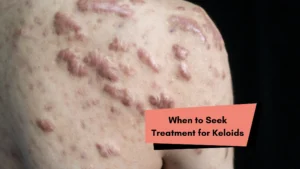
Early intervention often produces better outcomes than waiting until keloids become large. Recognising when to seek specialist help is important.
Early Warning Signs
Any scar that continues growing beyond the original injury site requires assessment. Persistent itching, tenderness, or redness after initial healing suggests possible keloid formation. Changes in scar texture, thickness, or appearance warrant medical evaluation.
Why Early Treatment Matters
Smaller, newer keloids respond better to treatment than large, established ones. Early intervention may prevent progression to more severe scarring requiring surgery. Treatment becomes more complex and expensive as keloids grow, making early action cost-effective.
Specialist Referral Indicators
Keloids not responding to basic steroid injections require specialist assessment. Ear keloids, facial keloids, or keloids affecting function need expert management. Advanced treatment options, available at specialist centres may benefit patients with difficult cases.
Conclusion
Keloids are relatively common in the UK, affecting 10-15% of the population overall with much higher rates in Afro-Caribbean, and Asian communities. Understanding your personal risk based on ethnicity, family history, and skin type helps you take preventive measures and seek early treatment when needed.
If you’re developing keloid scars or have high keloid risk, specialist assessment at Rejuvence Clinic can provide appropriate treatment options and prevent progression.
Frequently Asked Questions
What percentage of the UK population has keloids?
Approximately 10-15% of the UK population overall is affected by keloid scars, though this varies dramatically by ethnicity. Black African and Afro-Caribbean populations show 15-20% prevalence whilst white British populations show approximately 0.09-1%. Asian populations fall in the intermediate range at 5-10%, making the UK’s diverse population more susceptible overall than predominantly white European countries.
Are keloids more common in certain ethnic groups?
Yes, ethnicity represents the strongest keloid risk factor. Black African and Afro-Caribbean people show 15-20 times higher keloid risk than white Europeans. South Asian, East Asian, and Southeast Asian populations show intermediate risk approximately 5-10 times higher than white populations. This genetic predisposition relates to differences in wound healing, fibroblast activity, and collagen production between ethnic groups.
At what age do most people develop keloids?
Keloids most commonly develop between ages 10-30 years during peak wound healing activity. Adolescence and early adulthood represent highest risk periods due to hormonal changes, acne, and activities like ear piercing. New keloid development is rare in children under 10 and adults over 50, though existing keloids may continue growing throughout life.
Do keloids run in families?
Yes, family history strongly predicts keloid risk with 5-10 times higher probability if a first-degree relative has keloids. Multiple genes affecting collagen production, immune response, and wound healing contribute to familial susceptibility. However, having keloid-prone genetics doesn’t guarantee keloid development; you also need a triggering injury or inflammation.
Why are ear keloids so common?
Ear keloids account for approximately 40% of all keloid cases due to widespread ear piercing popularity. Piercing creates deliberate skin trauma in a high-tension area prone to keloid formation. Piercing guns cause more tissue damage than needles, whilst cartilage piercings carry higher risk than lobe piercings due to increased inflammation and prolonged healing.
Can you prevent keloids if you’re high-risk?
Prevention strategies include avoiding unnecessary procedures like elective piercings, tattoos, or cosmetic surgery. Early aggressive acne treatment prevents scarring that may progress to keloids. Compression therapy, silicone gel sheets, or prophylactic steroid injections after unavoidable procedures may reduce but cannot eliminate keloid risk in susceptible individuals.
Are keloids becoming more common in the UK?
Reported keloid prevalence appears to be increasing due to better awareness, improved diagnosis, and the UK’s increasingly diverse population. Immigration from high-risk regions means more keloid-susceptible individuals now live in the UK. However, actual biological incidence within ethnic groups likely remains stable; we’re simply recognising and treating keloids more effectively than previously.
Clinically Reviewed by:
Dr Sam Ghani MBBS BSc MRCSEd FRCEM MScAe